

Yadea T5 vs Crown Raftaar: Which One Should You Buy?
Yadea T5 or Crown Raftaar? We compare price, range, speed, battery, weight and warranty to help you pick the right electric scooter in Pakistan.
These two scooters come up together all the time, and it is easy to see why. They sit about Rs 45,000 apart, both claim 100 km or more on a charge, and both come from brands that people in Pakistan actually recognise.
But they are built for very different riders. The Yadea T5 is a calm, efficient city scooter. The Crown Raftaar is a heavy, fast machine with a big lithium battery that feels closer to a motorcycle than a scooty.
Choosing the wrong one will not ruin your life, but it can mean paying for speed you never use, or being stuck at 45 km/h on a road where everyone else is doing 70. Let us go through it properly.
Yadea T5 vs Crown Raftaar: specs side by side
Price | Rs 2,53,500 | Rs 2,99,000 |
Claimed range | 100 km | 130 km |
Top speed | 45 km/h | 90 km/h |
Motor | 800W | 2,000W |
Battery | 72V 26Ah graphene (about 1.87 kWh) | 2.88 kWh lithium |
Charging time | about 6 hours | about 5 hours |
Weight | 70 kg | 145 kg |
Battery warranty | 4 years / 50,000 km (as listed) | 4 years / 48,000 km (as listed) |
Brakes | Front disc, rear drum | Not published |
You can see this comparison live, with any updates, on the SawariPK compare page for these two scooters.
Price: Rs 45,500 apart
The Yadea T5 costs Rs 2,53,500. The Crown Raftaar costs Rs 2,99,000 on SawariPK and PakWheels, though some listings show Rs 3,09,900, so confirm with your dealer.
On paper, the Raftaar gives you a lot more for that extra Rs 45,500: double the top speed, 30 km more claimed range, a bigger lithium battery and a faster charge. If you judge purely on specs per rupee, the Raftaar wins comfortably.
But specs per rupee is not how most people ride. The real question is which one fits your daily route.
Speed: this is the biggest difference
Yadea T5: 45 km/h. That is enough for most inner-city roads, school runs and office commutes inside one part of a city. It is not enough for a ring road, a canal road at a quiet hour, or any road where cars and buses move at 60 km/h and above. At 45 km/h, you will be overtaken constantly, and that is not comfortable.
Crown Raftaar: 90 km/h. This is motorcycle territory. You can keep up with traffic on any city road and comfortably ride between nearby towns. PakWheels lists the motor at 2,000W.
If your route has even one long, fast stretch, the Raftaar is the safer choice. If it does not, the T5's lower speed is not a problem at all, and it will use less electricity.
Range: claimed and real
The T5 claims 100 km. The Raftaar claims 130 km.
Claimed figures are measured in ideal conditions. A fair rule for Pakistani roads is to expect around 70 to 75 percent of the claim in daily use. That puts the T5 at roughly 70 to 75 km and the Raftaar at roughly 90 to 100 km.
There is one more thing to keep in mind. Range drops when you ride fast. If you regularly ride the Raftaar at 70 to 80 km/h, its real range will be well below the claim. If you keep it at 40 to 50 km/h, you will get much closer.
The T5 is famous for being efficient. Yadea designed it around its TTFAR system, which combines the battery, controller, tyres and body shape to squeeze out more range. When it launched in Pakistan in November 2023, Yadea said a full charge uses about 2.5 units of electricity.
Winner on range: the Raftaar, but the T5 makes more out of every unit it uses.
Battery: graphene vs lithium
This is where the two scooters are most different under the seat.
The Yadea T5 uses a 72V 26Ah graphene battery. Graphene batteries are an improved form of lead-acid. They cost less than lithium and handle heat reasonably well, but they are heavier and take longer to charge.
The Crown Raftaar uses a 2.88 kWh lithium battery. That is about 50 percent more stored energy than the T5's pack. Lithium also tends to keep its capacity for more charge cycles.
Both are listed on PakWheels with very long battery warranties: 4 years or 50,000 km for the T5, and 4 years or 48,000 km for the Raftaar. These are unusually generous, especially for graphene, so ask the dealer to confirm the terms and write them on your invoice. Ask in particular whether the warranty covers a full replacement or only a repair.
Yadea also sells a lithium version of this scooter, the T5 Lithium, for Rs 3,05,000. That is slightly more than the Raftaar, and it keeps the T5's 45 km/h speed. So if you want lithium, the Raftaar gives you a lot more performance for the money.
Charging time
Yadea T5: about 6 hours
Crown Raftaar: about 5 hours
Neither is fast-charging. Both are overnight chargers for most people. The Raftaar's lithium pack charges a little quicker despite being larger.
If load-shedding is a problem in your area, both scooters will need planning around power cuts. A home solar system makes either one much easier to live with.
Weight and handling
This is the point most buyers overlook, and it matters a lot.
The Yadea T5 weighs about 70 kg. That is light enough for most people to push, park and balance easily, including women, older riders and first-time riders.
The Crown Raftaar weighs about 145 kg. That is more than double, and heavier than a Honda CG 125. It feels stable at speed, but it is hard work to push into a parking spot, to lift onto its stand, or to wheel through a narrow gali. If the battery runs flat, pushing it home is not fun.
For a tall, experienced rider, 145 kg is fine. For a student or someone who has never ridden before, the T5 is far easier to live with.
Running cost
Both scooters are very cheap to run compared with petrol.
The T5 uses about 2.5 units per full charge. At Rs 60 a unit, that is Rs 150 for 70 to 75 km of real riding.
The Raftaar's 2.88 kWh battery needs a bit over 3 units per full charge, including charger losses. That is roughly Rs 190 for 90 to 100 km of real riding.
So both cost around Rs 2 per kilometre. With petrol near Rs 394 a litre, a petrol scooty doing 35 to 45 km per litre costs several times more.
Resale and brand support
Yadea has a strong name in Pakistan, and used T5s sell for Rs 1.9 to 2.4 lakh on PakWheels. That is a sign that buyers trust the model second-hand.
Crown Electric says it has dealers in more than 26 cities and is a PAVE scheme partner. The Raftaar is newer and heavier, so its resale picture is less clear for now.
Before buying either, ask for the nearest service workshop, not just the nearest showroom.
So, which one should you buy?
Buy the Yadea T5 if:
Your daily ride stays inside the city and rarely needs more than 45 km/h
You want something light and easy to handle
You care about resale value and a proven model
You are buying for a student, a woman rider or a first-time rider
Buy the Crown Raftaar if:
Your route includes fast roads where 45 km/h feels unsafe
You ride long distances and want the bigger lithium battery
You are comfortable with a heavy, motorcycle-like machine
You want the most performance for under Rs 3 lakh
If you are still undecided, think about the slowest and fastest roads on your daily route. If the fastest one moves at 60 km/h or more, get the Raftaar. If not, the T5 will serve you well and save you Rs 45,500.
Frequently asked questions
Which is better, Yadea T5 or Crown Raftaar?
The Raftaar is faster and has more range. The T5 is lighter, easier to handle and has better resale. The right choice depends on your route.
What is the top speed of the Yadea T5?
45 km/h.
What is the top speed of the Crown Raftaar?
90 km/h, with a 2,000W motor.
Which has the longer range?
The Raftaar, with a claimed 130 km, versus 100 km for the T5.
Is the Crown Raftaar a scooter or a bike?
It has a scooter body, but its weight and speed are closer to a motorcycle.
Comparison table
| Spec | 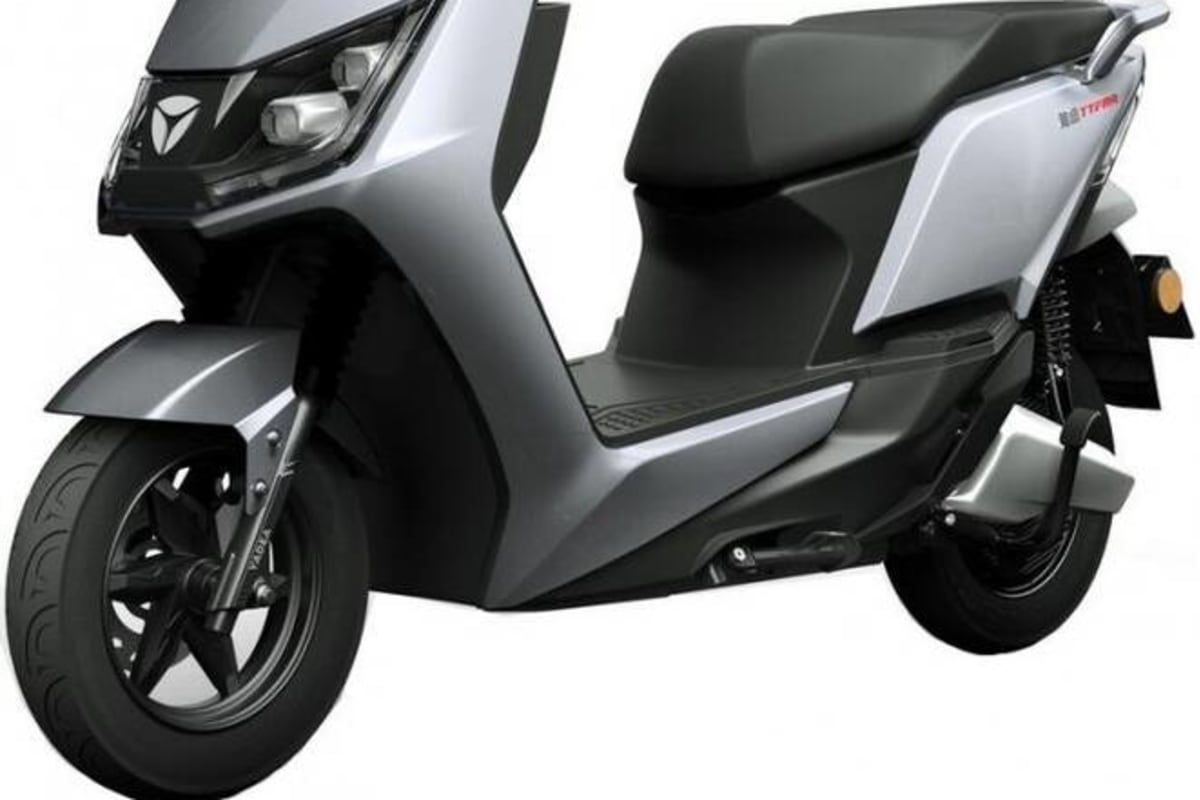 Yadea T5Available | 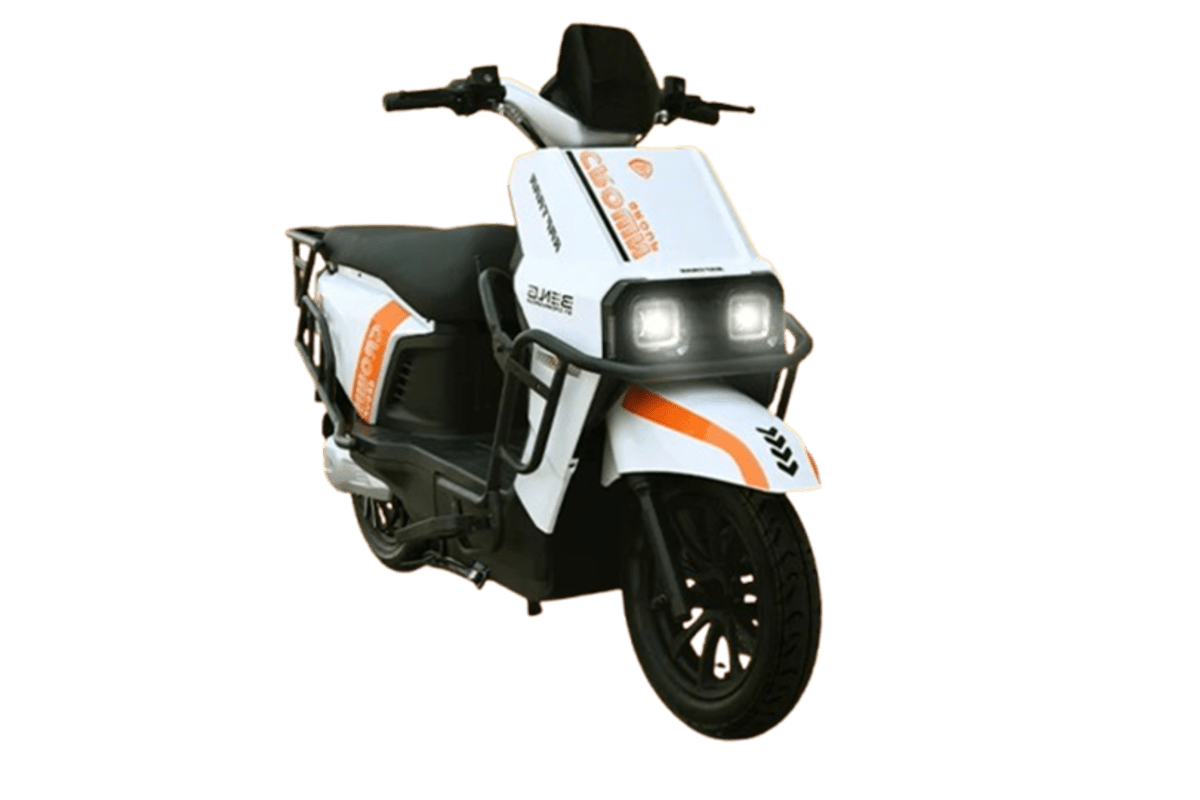 Crown RaftaarAvailable |
|---|---|---|
| Price | Rs. 2,53,500 | Rs. 2,99,000 |
| Range | 100 km | 130 km |
| Top speed | 45 km/h | 90 km/h |
| Motor power | 800 W | 2000 W |
| Battery energy | 1.87 kWh | 2.88 kWh |
| Battery type | Graphene Battery | Lithium |
| Charging time | 6 hrs | 5 hrs |
| Weight | 70 kg | 145 kg |
| Load capacity | 100 kg | - |
| Brakes | Front Disc, Rear Drum | - |
| Tyres | 90 - 70 | Front 3.5 - 12, Rear 4.3 - 10 |
| Warranty | Battery: 4 Years / 50000 km | Battery: 4 Years / 48000 km |
| Status | Available | Available |
| Colours | Grey, Red, White | Red, Blue, Silver, Black, White |
| Torque | 86 Nm | 11 Nm |
| Starting | Electric (button Start) | Electric |
| Wheel size | 10 in | 12 in |
| Charger type | Standard AC | Standard AC |
| Range test standard | Claimed | Claimed |
| Dimensions (L x W x H) | 1780 x 700 x 1180 mm | 1860 x 780 x 1110 mm |
| Wheelbase | 1272 mm | 1200 mm |
| Ground clearance | 160 mm | 130 mm |
| Frame | Scooter | Scooter |
| Front suspension | Telescopic Fork | - |
| Rear suspension | Twin Shock | - |
| Headlight | LED | - |
| Speedometer | Digital | - |
| Features | Reverse mode, Anti-theft alarm | - |
Mentioned in this post
Writer
AdminComments (0)
No comments yet. Be the first to comment!
Leave a comment
Read next
PM PAVE Scheme: Which Bikes Are Included and Who Can Apply
Everything about the PM PAVE electric bike scheme: subsidy amount, eligible models, who can apply, how to register on pave.gov.pk and what changed in Phase 2.
How Many Units Does an Electric Bike Use per Charge?
How many electricity units does an electric bike or scooty use per full charge in Pakistan? Model-by-model figures, an easy formula and what it costs you.
Electric Bike Charging Cost per Month at LESCO Rates
How much does charging an electric bike add to a LESCO bill each month? Real examples by distance, tariff slab warnings and ways to keep the cost down.