

Electric Bike Charging Cost per Month at LESCO Rates
How much does charging an electric bike add to a LESCO bill each month? Real examples by distance, tariff slab warnings and ways to keep the cost down.
"Electric scooty chalane ka kharcha kitna hai?" Ask that in Lahore and you will hear numbers from Rs 500 to Rs 5,000 a month. Both can be true. It depends on how far you ride, which scooty you have, and most of all, where your house sits on LESCO's tariff slabs.
That last part is the one people overlook. The cost of the units your scooty uses is usually small. The cost of pushing your house into a higher slab can be much bigger.
In this guide we work out the real monthly charging cost at LESCO rates, show you how to calculate it for your own home, and explain how to avoid an unpleasant surprise on your bill.
Tariffs change often, through NEPRA decisions, fuel price adjustments and quarterly adjustments. The figures below are for guidance. Always check your latest LESCO bill and the LESCO bill estimator.
LESCO rates: what you need to know
LESCO charges residential customers by slab, based on how many units you use in a month. According to a 2026 tariff summary from ToolsFluent based on the February 2026 notified schedule:
Protected consumers pay very low rates, around Rs 10.54 to Rs 13.01 per unit in the slabs listed
Unprotected consumers pay from around Rs 22.44 per unit in lower slabs, rising steeply
The 401 to 500 unit slab for unprotected users was listed at Rs 38.95 per unit, with LESCO's own estimator showing Rs 35.24 when checked in August 2026
Time of Use meters: about Rs 46.85 peak and Rs 34.53 off-peak
On top of the base rate, your bill includes:
FC surcharge: about Rs 3.23 per unit
Fuel Price Adjustment (FPA) and Quarterly Tariff Adjustment (QTA), which change every month or quarter
Electricity Duty: 1.5 percent
GST: 18 percent
A fixed charge based on sanctioned load
PTV fee
Once all of that is added, the effective cost per unit for many unprotected homes in the middle slabs is roughly Rs 45 to Rs 60. One ToolsFluent example puts a 300-unit bill at about Rs 13,772, which works out to around Rs 46 per unit.
The monthly charging cost
Most electric scooties use about 0.02 to 0.04 units per kilometre in real riding. We explain where that comes from in our post on units per charge.
Here is what that means for your bill, at three effective rates:
Monthly riding | Units added | At Rs 40/unit | At Rs 50/unit | At Rs 60/unit |
|---|---|---|---|---|
500 km | 10 to 20 | Rs 400 to 800 | Rs 500 to 1,000 | Rs 600 to 1,200 |
750 km | 15 to 30 | Rs 600 to 1,200 | Rs 750 to 1,500 | Rs 900 to 1,800 |
1,000 km | 20 to 40 | Rs 800 to 1,600 | Rs 1,000 to 2,000 | Rs 1,200 to 2,400 |
1,500 km | 30 to 60 | Rs 1,200 to 2,400 | Rs 1,500 to 3,000 | Rs 1,800 to 3,600 |
The lower end of each range is for small, efficient scooties like the Revoo A09 or Jolta JE-70D. The higher end is for larger, faster bikes like the Crown Raftaar or Inverex GO Volterra Swap.
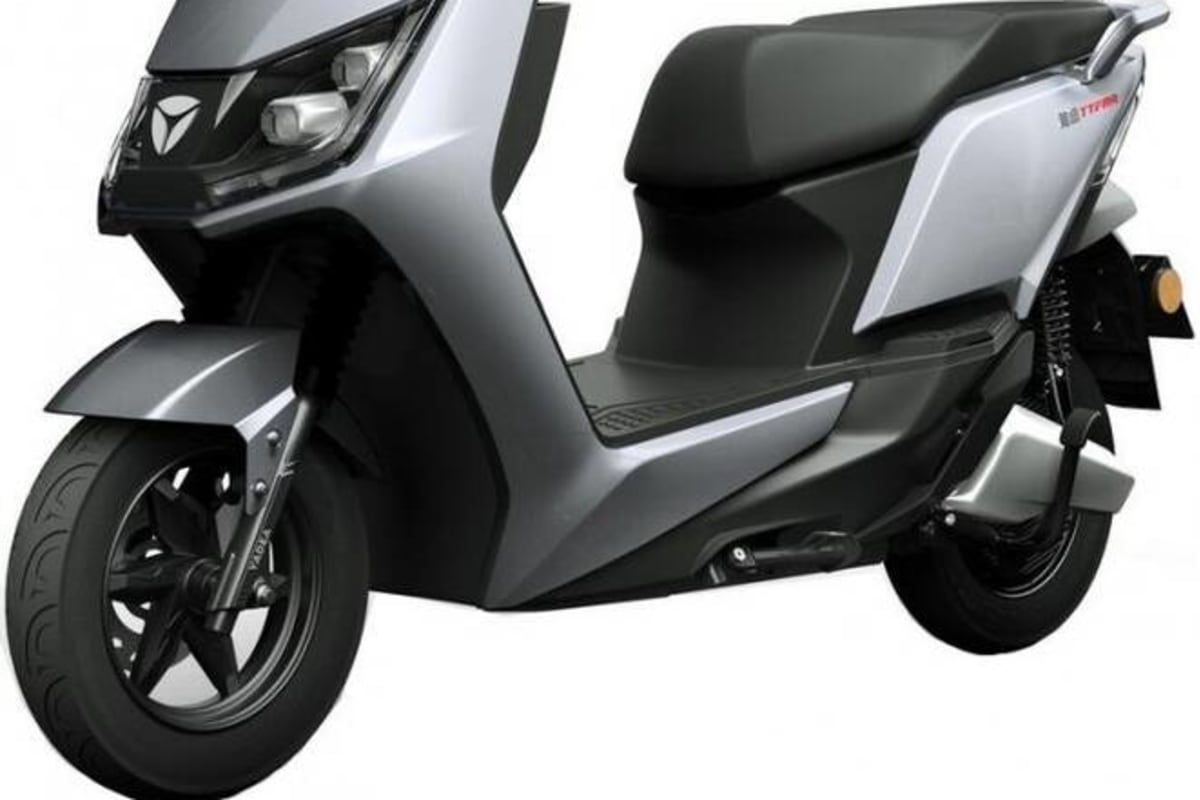
For a typical commuter riding about 1,000 km a month on a mid-size scooty like the Yadea T5, expect roughly Rs 1,500 to Rs 2,000 a month in charging.
Compare that with petrol
At Rs 393.86 per litre in October 2026:
A 70cc bike at about 53 km per litre costs around Rs 7,400 in petrol for 1,000 km
A 100cc petrol scooty at 35 to 45 km per litre costs around Rs 8,750 to Rs 11,250 for 1,000 km
Even at the highest LESCO rates, charging an electric scooty for the same distance costs a fraction of that.
The slab trap: where the real cost hides
Here is a situation we see often.
A family in Lahore uses about 190 units a month. They are a protected consumer, paying very low rates. They buy an electric scooty and start charging it every night. It adds 35 units. Now they are using 225 units a month.
The scooty's own 35 units might cost a few hundred rupees. But crossing 200 units can cost them protected status, and then every unit in the house gets billed at a much higher rate. Their bill could jump by several thousand rupees, and they blame the scooty for all of it.
The same thing happens at other slab edges for unprotected users. ToolsFluent's examples show a clear jump in the total bill between 300 and 301 units.
How to work out your true cost:
Look at your last six LESCO bills and note the units each month
Add the scooty's estimated monthly units (from the table above)
Check whether the new total crosses a slab limit
Use the LESCO bill estimator to compare your bill at the old and new totals
The difference is the real monthly cost of charging your scooty
Ways to keep charging costs down
1. Charge somewhere else, sometimes
If your workplace allows it, charging there during the day takes units off your home bill. Many offices already have rows of e-bikes plugged in.
2. Use solar
If your home has solar panels, charge the scooty during daylight hours. A typical scooty charger draws only a few hundred watts, which most home solar systems can handle easily. More on this in our post on charging an electric bike on solar panels.
3. Charge off-peak if you have a ToU meter
On a Time of Use meter, off-peak units are cheaper than peak units. Charging late at night or early in the morning saves money.
4. Do not charge to 100 percent every night
If your daily ride is 20 km and your scooty has a 70 km range, you do not need a full charge every night. Charging every second night uses the same total units, but some riders find partial charging lets them shift charging to better times, like when solar is available.
5. Choose an efficient scooty
A smaller battery with a lighter scooty uses fewer units per kilometre. If your commute is short, you do not need a 4 kWh battery.
6. Use the original charger
A cheap replacement charger can waste energy and damage your battery. Dealers quoted by APP in September 2026 said many buyers spend heavily on the vehicle and then cut corners on the charger.
A real example
Let us take a student in Lahore riding about 25 km a day, 26 days a month, on an MS Jaguar Miso.
Monthly distance: about 650 km
Units used: about 26 units (around 2 units per charge, roughly 13 charges)
Cost at Rs 55 per unit: about Rs 1,430 a month
The same distance on a 100cc petrol scooty at 35 km per litre would use about 18.6 litres, or roughly Rs 7,300 in petrol.
That is a saving of nearly Rs 6,000 a month, as long as the extra 26 units do not push the house into a higher slab.
Frequently asked questions
How much does it cost to charge an electric bike per month on LESCO?
For about 1,000 km a month, roughly Rs 1,000 to Rs 2,400, depending on your scooty and effective tariff.
What is LESCO's per unit rate?
It depends on your slab and whether you are protected. Protected consumers pay around Rs 10.54 to Rs 13.01 per unit in the listed slabs, while unprotected rates start around Rs 22.44 and rise. Taxes and adjustments raise the effective cost.
Will an electric scooty make me lose protected status?
It can, if it pushes your monthly use above the protected limit. Check your bills before you buy.
Is it cheaper to charge at night?
On a Time of Use meter, yes. Off-peak units are cheaper.
Is charging an electric bike cheaper than petrol?
Yes, by a wide margin. Even at high LESCO rates, charging usually costs a fraction of petrol for the same distance.
Sources
ToolsFluent: NEPRA tariff 2026, all DISCOs
ToolsFluent: LESCO bill worked examples 2026-27
Pak Observer: Petrol price October 15, 2026
PakWheels: Petrol vs EV bike cost per km
Gari.pk: United 100cc Scooty
APP: Electric scooty boom turns into a repair nightmare
Profit: Electric bikes charging at offices
Mentioned in this post
Writer
AdminComments (0)
No comments yet. Be the first to comment!
Leave a comment
Read next
How Many Units Does an Electric Bike Use per Charge?
How many electricity units does an electric bike or scooty use per full charge in Pakistan? Model-by-model figures, an easy formula and what it costs you.
Can You Charge an Electric Bike on Solar Panels?
Yes, you can charge an electric bike or scooty on solar in Pakistan. How many panels you need, which inverter works, daytime charging tips and safety.
Charging Your E-Bike During Load Shedding: What Works
Load-shedding and an electric bike? Practical ways to keep charged in Pakistan: timing, UPS limits, solar, fast-charging batteries, swapping and voltage protection.