

Vlektra Bolt vs Inverex GO Volterra Swap
Vlektra Bolt or Inverex GO Volterra Swap? Two 150 km electric motorcycles compared on price, speed, battery, charging, swapping and who each one suits.
If you want an electric motorcycle in Pakistan that can actually replace a 125cc, not just a 70cc, these are two of the bikes you will end up looking at.
The Vlektra Bolt is the premium choice. It has been around for a while, it is quick, and it has a reputation for good build quality. The Inverex GO Volterra Swap is the new arrival from a company most people know for solar inverters, and its big idea is battery swapping: ride in with a flat battery, ride out with a full one in about 30 seconds.
Both claim around 150 km of range. But they cost very different amounts, and they solve the "what happens when my battery runs out" problem in completely different ways.
Specs side by side
Price on SawariPK | Rs 5,49,000 | Rs 2,99,000 |
Claimed range | 150 km | 150 km |
Top speed | 105 km/h | 90 km/h |
Motor | 3,000W, 120 Nm | 3,000W |
Battery | LFP (lithium iron phosphate) | 72V 54Ah |
Charging | about 3 to 3.5 hours | Battery swap in about 30 seconds |
Dry weight | 130 kg | Not published |
Brakes | Disc front and rear with CBS | Not published |
Battery warranty | 3 years | Not published |
A note on prices: some sites list the Vlektra Bolt at Rs 5,84,000, and launch coverage in August 2026 quoted a starting price of Rs 3,89,000 for the Volterra range (Lite, Pro and Swap). Prices in this segment have been moving, so confirm with the dealer before you go. You can see the latest figures on the SawariPK price list.
Price: the biggest gap
At the SawariPK listed prices, the Volterra Swap costs about Rs 2,50,000 less than the Vlektra Bolt. Even if the Volterra Swap ends up nearer the Rs 3,89,000 launch figure, it is still around Rs 1.6 lakh cheaper.
That is a lot of money. For the difference, you could buy a whole second electric scooty.
So the real question is: what does the Bolt give you for the extra money?
Performance: Bolt is faster
Both bikes are listed with 3,000W motors. The Bolt has a published torque figure of 120 Nm and a top speed of 105 km/h. The Volterra Swap tops out at 90 km/h.
In a city, you will rarely use either bike's top speed. Both are quick enough to keep up with traffic on any main road. Where the Bolt's extra speed matters is on open roads between cities and on faster stretches like ring roads, where having power in reserve makes overtaking safer.
The Bolt also has disc brakes at both ends with a combined braking system (CBS), which spreads braking force between the wheels. At 100 km/h and above, good brakes are not optional.
Winner on performance: Vlektra Bolt.
Range: both claim 150 km
Both bikes claim 150 km on a full battery. In real riding, especially at higher speeds, expect less. A fair guess for mixed city riding is 100 to 120 km on either bike.
There is one thing worth flagging. PakWheels lists the Bolt's battery at 2.0 kWh, which seems small for a claimed 150 km at this power level. The Volterra Swap's 72V 54Ah battery works out to almost 3.9 kWh. Before you buy a Bolt, ask the dealer to confirm the battery capacity in kWh, because it tells you far more about real range than the claimed number.
Charging vs swapping: the real difference
This is what really separates these two bikes.
Vlektra Bolt: charge it
The Bolt uses an LFP battery that charges in about 3 to 3.5 hours on a standard charger. That is quick for an electric motorcycle. You can charge overnight, or top up during a long lunch.
LFP batteries are known for lasting many charge cycles and for handling heat well. The Bolt's battery comes with a 3-year warranty.
The downside of charging is simple: when the battery is flat, you need to stop for hours. On a long trip, that means planning your stops carefully.
Volterra Swap: swap it
The Volterra Swap is built around a swappable battery. Instead of waiting for a charge, you ride to a swap station and exchange your battery for a full one in about 30 seconds.
On paper, this solves the biggest problem with electric bikes in Pakistan. You do not need to charge at home, load-shedding does not stop you, and a flat battery is only a short detour away.
But swapping is only as good as the network. Before buying, ask Inverex GO three questions:
How many swap stations are there in your city, and where are they?
How much does each swap cost, or is it a monthly subscription?
Who owns the battery: you, or the company? This affects resale and long-term cost.
If there are swap stations near your home and office, the Volterra Swap is very convenient. If the nearest one is 15 km away, swapping is much less useful, and you will be relying on regular charging instead.
Brand and support
Vlektra is a Pakistani premium EV brand that has built a following among riders who want a stylish, fast electric motorcycle. The brand also showed a new Bolt Dark variant at the Pakistan EV Expo 2026. Its main strength is product quality. Its weakness is price.
Inverex GO is new to bikes, but its parent brand, Inverex, is well known in Pakistan for solar inverters and batteries. It launched a full range in August 2026, from scooters like the Vexa and Rogue to motorcycles like the Volterra, Roar, Charlie and FireBird, plus a loader and a rickshaw. That suggests a serious, long-term plan. But it also means the bikes do not yet have a long track record on Pakistani roads.
Running cost
Both bikes are cheap to run compared with a petrol 125cc.
With the Bolt, you pay for electricity at home. A full charge of a 2 to 4 kWh battery is roughly 2.5 to 4.5 units including losses, so around Rs 150 to Rs 270 at Rs 60 a unit, for 100 km or more of riding.
With the Volterra Swap, your cost depends on the swap pricing, which Inverex GO had not detailed in the launch coverage we read. Ask for the price per swap or the monthly plan, then compare it with what home charging would cost.
Either way, with petrol near Rs 394 a litre, a petrol 125cc doing around 40 km per litre costs close to Rs 10 a kilometre in fuel alone. Both electric bikes cost a fraction of that.
Who should buy which
Buy the Vlektra Bolt if:
You want the fastest, best-built electric motorcycle you can find
You ride on open roads or between cities and value 105 km/h and disc brakes with CBS
You can charge at home or work and a 3-hour charge suits your routine
You want the security of a 3-year battery warranty
Buy the Inverex GO Volterra Swap if:
You want a capable 150 km electric motorcycle for much less money
There are swap stations on your daily route
You do not have reliable power at home, or you suffer long load-shedding
You like the idea of a 30-second "refill" instead of hours of charging
If you are torn, check the swap network first. If it covers your area well, the Volterra Swap is excellent value. If it does not, the Bolt's fast charging and stronger track record are worth considering seriously, even at the higher price.
You can compare both bikes side by side, along with others in this range, on the SawariPK compare tool. Browse more models on the Inverex GO brand page.
Frequently asked questions
Which is better, Vlektra Bolt or Volterra Swap?
The Bolt is faster and has better-documented brakes and warranty. The Volterra Swap is much cheaper and offers battery swapping. The better choice depends on your budget and whether swap stations are near you.
What is the price of the Vlektra Bolt in Pakistan?
Rs 5,49,000 on SawariPK and PakWheels, though some listings show Rs 5,84,000.
What is the price of the Inverex GO Volterra Swap?
Rs 2,99,000 on SawariPK. Launch coverage quoted Rs 3,89,000 as the starting price for the Volterra range, so confirm with the dealer.
How long does a battery swap take?
About 30 seconds, according to Inverex GO's launch details.
What is the top speed of the Vlektra Bolt?
105 km/h.
Comparison table
| Spec | 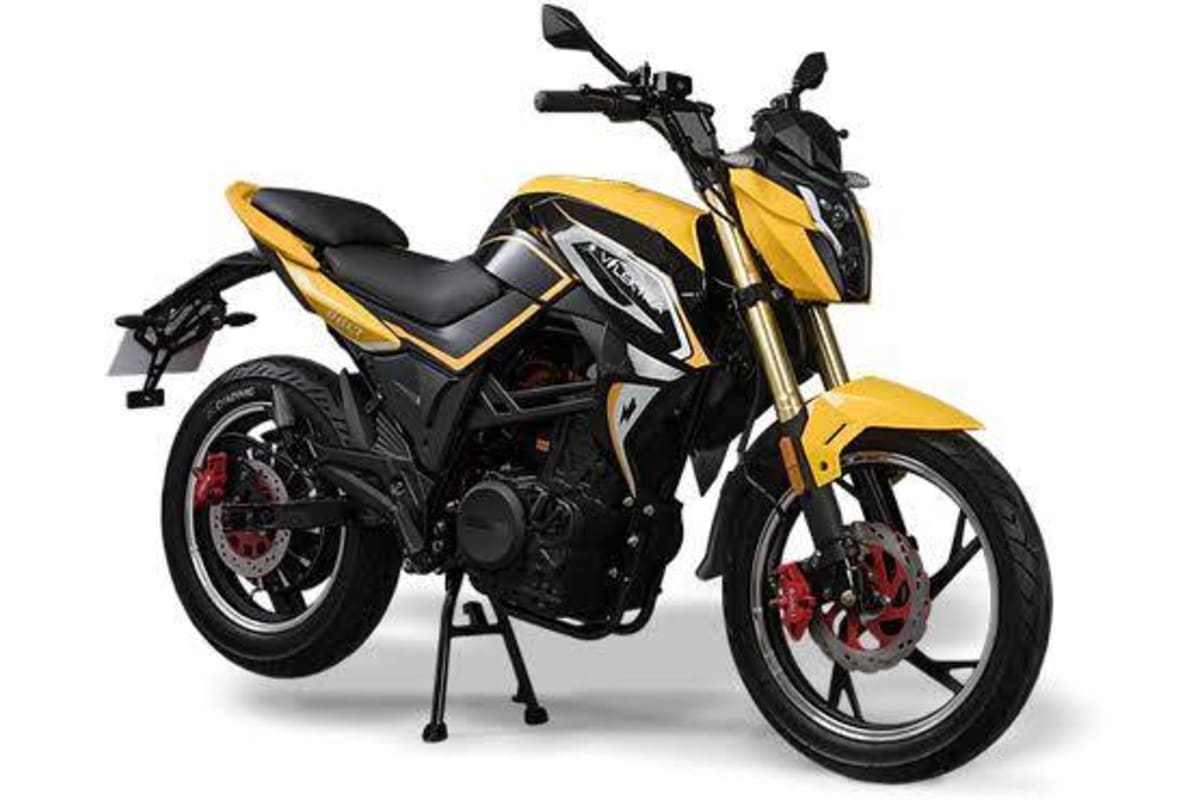 Vlektra BoltAvailable | 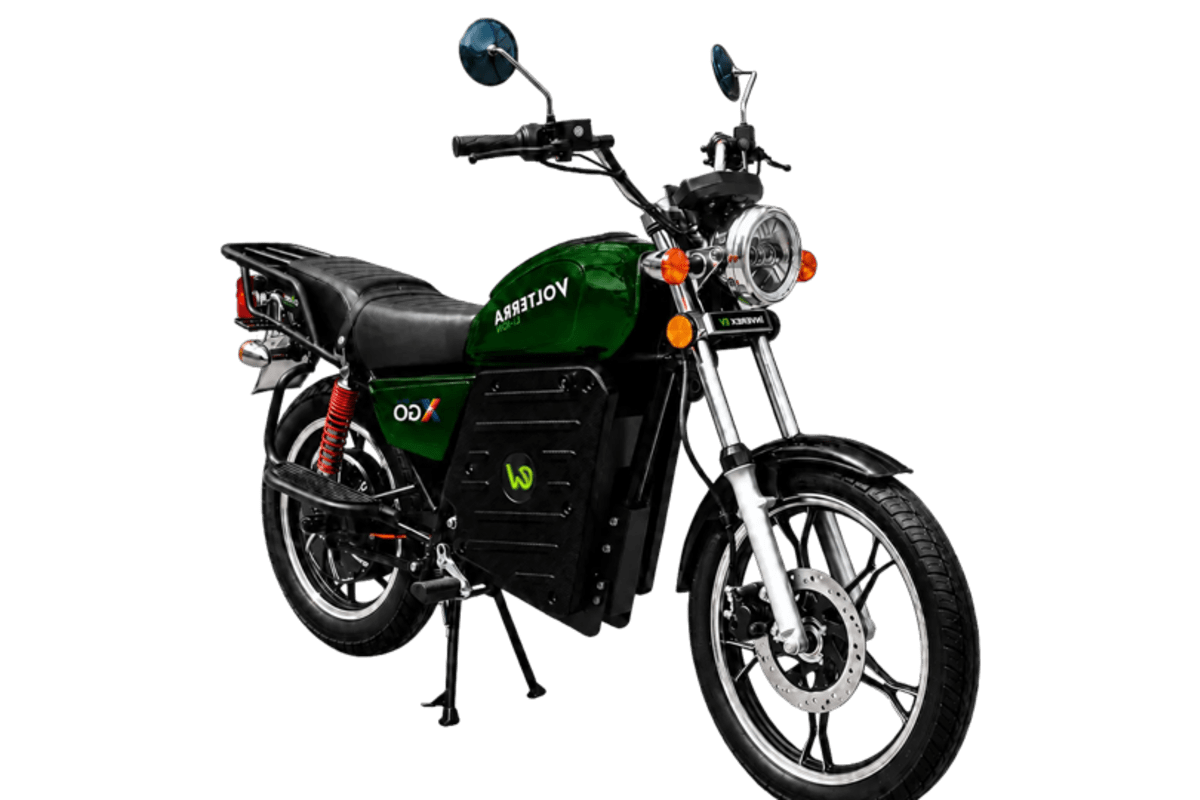 Inverex GO Volterra SwapAvailable |
|---|---|---|
| Price | Rs. 5,49,000 | Rs. 2,99,000 |
| Range | 150 km | 150 km |
| Top speed | 105 km/h | 90 km/h |
| Motor power | 3000 W | 3000 W |
| Battery energy | 2 kWh | 3.88 kWh |
| Battery type | Lithium iron phosphate | Lithium iron phosphate |
| Charging time | 3.5 hrs | 4 hrs |
| Weight | 130 kg | 125 kg |
| Load capacity | 150 kg | 150 kg |
| Brakes | Front Disc, Rear Disc | Front Disc, Rear Disc |
| Tyres | Front 90 - 17, Rear 80 - 16 | Front 2.75 - 18, Rear 90 - 16 |
| Warranty | Battery: 3 Years | Battery: 3 Years |
| Status | Available | Available |
| Colours | BumbleBee, Silver Fox, Yellow | Stealth Black, Forest Green, Fiery Red |
| Torque | 120 Nm | 36.3 Nm |
| Starting | Electric | - |
| Wheel size | 17 in | 18 in |
| Charger type | Standard AC | Standard AC |
| Range test standard | Claimed | Claimed |
| Dimensions (L x W x H) | 1977 x 695 x 1310 mm | 1950 x 775 x 1090 mm |
| Wheelbase | 1296 mm | 1300 mm |
| Ground clearance | 190 mm | 240 mm |
| Frame | Backbone | Tubular |
| Front suspension | Telescopic Fork | Telescopic Fork |
| Rear suspension | Mono-shock | Twin Shock |
| Headlight | DRL + Projector | LED |
| Speedometer | Digital | Digital |
| Features | Daytime running lights, Reverse mode, GPS tracking, Anti-theft alarm | Daytime running lights, Reverse mode, Anti-theft alarm |
| Fast charge (10-80%) | - | 173 min |
| Storage | - | 5 L |
| Removable battery | - | Yes |
Mentioned in this post
Writer
AdminComments (0)
No comments yet. Be the first to comment!
Leave a comment
Read next
How Many Units Does an Electric Bike Use per Charge?
How many electricity units does an electric bike or scooty use per full charge in Pakistan? Model-by-model figures, an easy formula and what it costs you.
Charging Your E-Bike During Load Shedding: What Works
Load-shedding and an electric bike? Practical ways to keep charged in Pakistan: timing, UPS limits, solar, fast-charging batteries, swapping and voltage protection.
Real Range vs Claimed Range: We Checked 10 Popular Scooters
Claimed range vs real range for 10 popular electric scooters in Pakistan, from Evee Gen-Z to Crown Raftaar, based on owner reports, reviews and brand data.